
The quality, performance and manufacturing process of solar panels are of great importance in the solar energy industry. Along with manufacturing, testing and inspection equipment is also required to ensure the efficiency and reliability of the solar module. Sun Simulator Machine and Solar Panel Manufacturing Equipment play an important role in this process.
Different equipment is used for different stages in a solar module manufacturing plant. These may include systems related to cell handling, stringing, layup, lamination, testing, inspection and packaging. The right equipment should be selected according to production capacity, module specifications and quality requirements.
What is a Sun Simulator Machine?
Sun Simulator Machine is a testing system used to evaluate the electrical performance of a solar module or solar cell in a controlled laboratory or manufacturing environment. It attempts to create controlled illumination conditions like sunlight through artificial light sources.
The electrical parameters of a solar module can be measured by exposing it to specified testing conditions. This helps manufacturers evaluate the performance and quality of the module.
Role of Sun Simulator in Solar Module Testing
Solar modules may have to operate in different environmental conditions. Therefore, it is important to test their electrical performance after manufacturing.
Parameters like current-voltage characteristics can be evaluated through a sun simulator. Testing data can help manufacturers monitor production quality and identify performance differences across modules.
Controlled Testing Environment
Natural sunlight does not have the same intensity throughout the day. Sunlight conditions may change due to weather, clouds and time of day. This can make it difficult to do consistent testing.
Sun simulator machines can help make testing conditions more consistent by providing controlled illumination. This can make it easier to evaluate the performance of different modules under comparable conditions.
What is Solar Panel Manufacturing Equipment?
Solar Panel Manufacturing Equipment is a set of machines and systems that are used to assemble solar cells into solar modules. The configuration of the manufacturing line may vary according to the production capacity and module technology.
A typical production setup may include processes such as cell testing, tabbing and stringing, layup, lamination, framing, junction box installation and final testing.
Cell Stringing Equipment
In solar module production, solar cells are arranged in strings with electrical connections. Stringing equipment helps in connecting the cells accurately.
Automated systems can support production speed and consistency. Reducing breakage and maintaining alignment during cell handling is important for manufacturing quality.
Layup Equipment
After the cell strings are prepared, they are arranged according to the module structure. In the layup process, cells and other module layers are placed in a specified configuration.
Automatic layup can help improve equipment positioning accuracy and production consistency. The layout configuration may differ depending on the module design.
Lamination Equipment
Lamination is an important stage in solar module manufacturing. In this process, different layers of the module are laminated under controlled temperature, pressure and vacuum conditions.
The purpose of the laminator is to properly bond the module layers and help protect the cells from environmental exposure. Lamination parameters are determined according to module materials and production specifications.
Framing and Junction Box Installation
After lamination, the module can be framed. An aluminium frame helps in providing mechanical support to the module.
After this, the junction box and electrical connections are installed. Proper installation of these components is important for the electrical safety and functionality of the module.
EL Testing and Visual Inspection
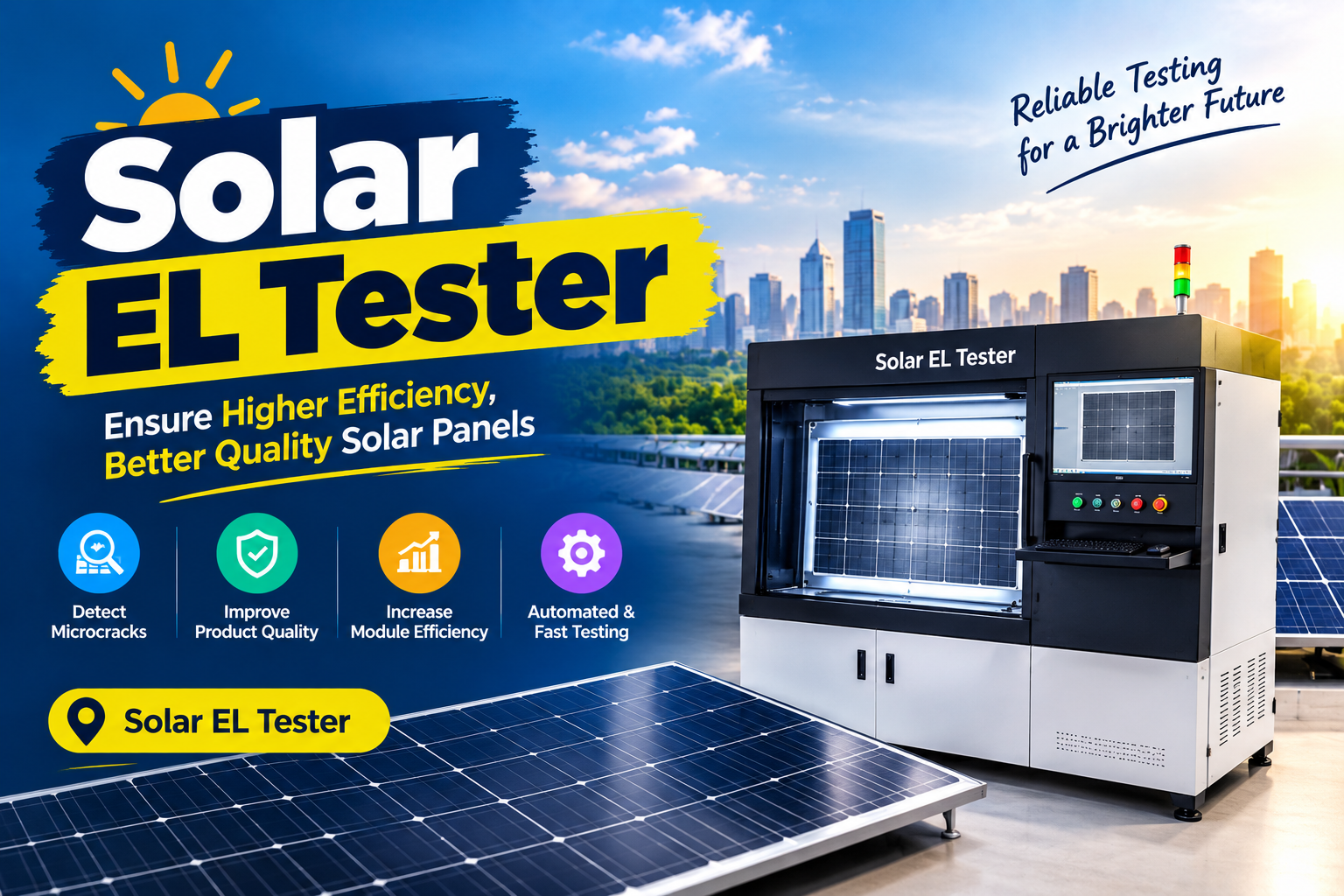
Quality inspection is also necessary in solar panel manufacturing. Electroluminescence testing can help identify some internal cell defects.
Visual inspection can check for cracks, alignment issues, surface defects and other visible problems. Automated inspection systems can support manufacturing consistency.
Pay attention when choosing Solar Panel Manufacturing Equipment
While selecting manufacturing equipment, production capacity, module dimensions, automation level and available factory space should be kept in mind.
Apart from this, machine accuracy, energy consumption, maintenance requirements and after-sales technical support can also be important factors.
If the production line is to be expanded in the future, it is also useful to consider the scalability of the equipment.
Importance of Automation
Automation in modern solar module manufacturing can help improve production consistency and process control. Automated machines can perform repetitive operations in a controlled manner.
The level of automation can be chosen according to production requirements and investment capacity. Some plants use semi-automatic systems, while larger manufacturing facilities may adopt highly automated production lines.
Importance of Quality Control
Manufacturing quality is important for the long-term performance of solar panels. It may be necessary to monitor process parameters and test the final product at each production stage.
A sun simulator machine can assist in final electrical performance evaluation, while other Solar Panel Manufacturing Equipment can contribute to making the production process controlled and consistent.
Production Line Planning
The complete production workflow should be planned before setting up the solar module manufacturing line. It is important to arrange all the stages in sequence, from raw material handling to final testing and packaging.
Material movement, operator safety, machine accessibility and maintenance space should also be taken care of in the factory layout. This can help in managing the production process in a more organised manner.
Conclusion
Both production and testing are important in solar module manufacturing. Sun Simulator Machine helps evaluate the electrical performance of solar modules under controlled conditions, while Solar Panel Manufacturing Equipment supports various manufacturing stages from cell handling to lamination, framing and final inspection. While choosing equipment, it is better to keep in mind production capacity, automation, accuracy, maintenance and future expansion requirements.















Write a comment ...